
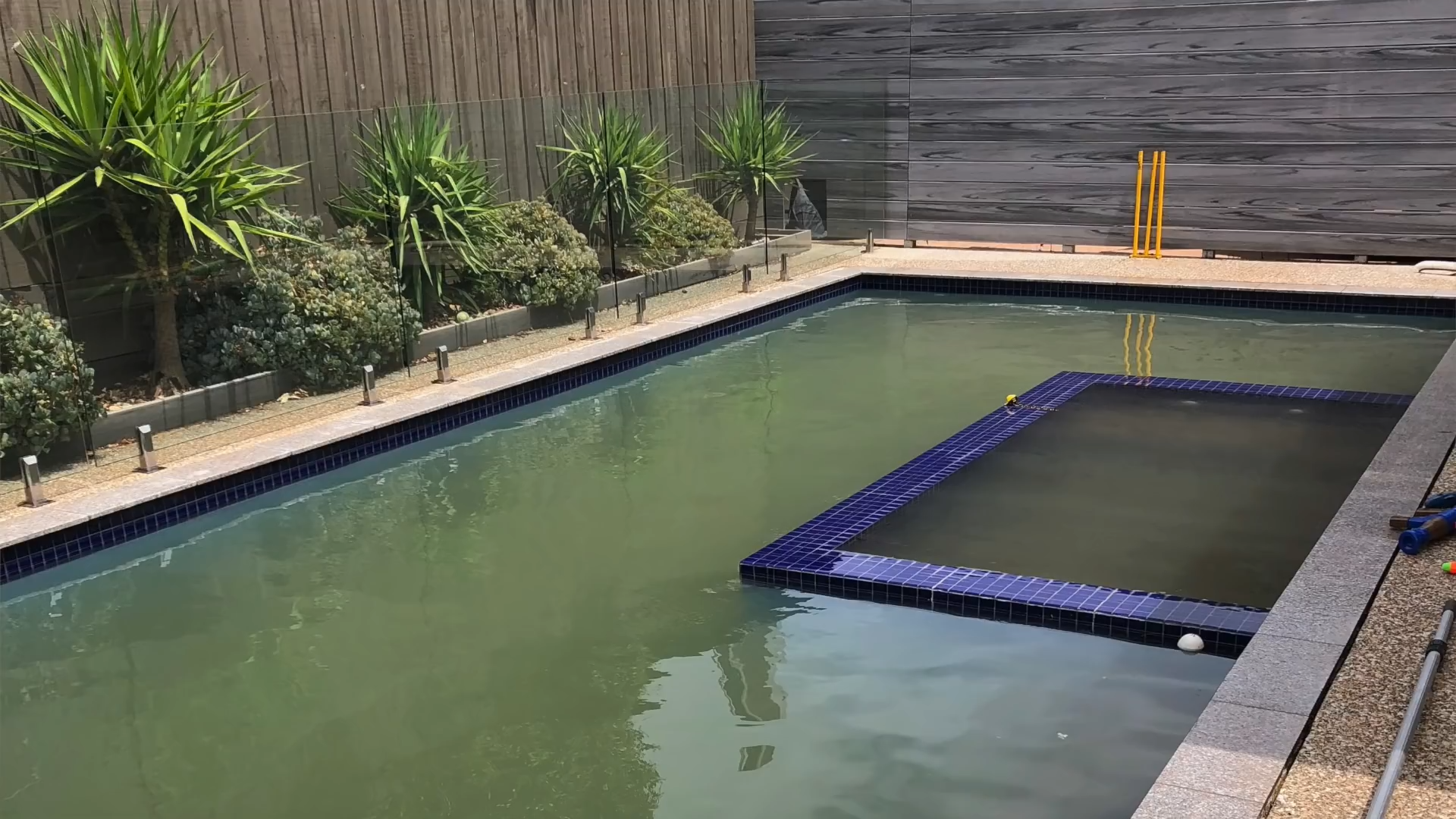
Why Pools Turn Green After Heavy Rain in Spring TX (And How to Prevent It)
If you’ve looked out at your pool after a major rainstorm in Spring, Texas and noticed cloudy water, debris floating across the surface, or even a green tint beginning to appear, you’re not alone.
Heavy rain can dramatically affect pool water chemistry in a matter of hours. Many homeowners are surprised to learn that a pool that looked perfectly clear before a storm can begin showing signs of algae growth only days later.
At Azul Pool Cleaning, one of the most common calls we receive after severe weather is from homeowners asking why their pool suddenly looks cloudy, green, or dirty after a storm.
The answer usually comes down to a combination of water chemistry, debris, filtration, and environmental contamination.
How Heavy Rain Affects Pool Water
Rainwater itself is not necessarily harmful to a swimming pool.
The problem is everything that comes with it.
During a heavy rain event, pools often receive:
- Leaves
- Pine needles
- Grass clippings
- Dirt
- Dust
- Pollen
- Organic debris
- Fertilizer runoff
- Contaminants from surrounding landscaping
All of these materials consume chlorine and create conditions that algae can thrive in.
When sanitizer levels begin dropping, algae spores already present in the environment can begin multiplying rapidly.
This is often why a pool appears fine immediately after a storm but begins turning cloudy or green several days later.
Chlorine Gets Used Up Faster After Rain
One of the biggest misconceptions among pool owners is that rain adds chlorine to a pool.
It doesn’t.
In fact, storms often increase chlorine demand significantly.
Organic debris entering the water forces chlorine to work harder. As chlorine becomes depleted, the pool loses its ability to sanitize effectively.
Once chlorine levels fall too low, algae can begin developing on:
- Pool walls
- Steps
- Waterline tile
- Pool floors
- Corners with reduced circulation
This process can happen surprisingly fast during warm Texas weather.
Storm Debris Feeds Algae Growth
Leaves and organic matter don’t just make a pool look dirty.
As debris breaks down, it introduces nutrients that algae can use as food.
Even small amounts of debris trapped in:
- Skimmer baskets
- Pump baskets
- Pool corners
- Dead circulation zones
can contribute to water quality issues.
This is one reason why prompt cleanup after storms is important.
The longer debris remains in the water, the greater the chance of algae development.
Cloudy Water After Rain
Many homeowners notice cloudy water before they notice algae.
Cloudiness often occurs because storms introduce fine particles that remain suspended throughout the water column.
Common causes include:
- Dirt
- Pollen
- Dust
- Fine organic debris
- Filter overload
- Reduced circulation
When filtration systems become overwhelmed, these particles remain suspended instead of being removed.
The result is water that appears dull, hazy, or milky.
Filtration Becomes More Important After Storms
Your pool filter serves as the primary defense against contaminants entering the water.
After a major storm, filters frequently collect large amounts of:
- Dirt
- Pollen
- Leaves
- Organic waste
As filters become dirty, water flow decreases.
Reduced circulation creates additional opportunities for algae growth.
This is why filter cleaning is often recommended following periods of heavy rain and debris accumulation.
A clean filter helps improve circulation, increase water clarity, and support proper chemical distribution throughout the pool.
Why Texas Pools Are Especially Vulnerable
Pool owners in Spring, Texas face unique challenges.
Our area experiences:
- High humidity
- Long swimming seasons
- Frequent thunderstorms
- Heavy pollen loads
- Warm water temperatures
Warm water combined with low sanitizer levels creates ideal conditions for algae growth.
What might take weeks to develop in cooler climates can happen much faster during a Texas summer.
Signs Your Pool Is Developing A Problem
Watch for these early warning signs after storms:
- Water losing its sparkle
- Slight green tint
- Cloudy appearance
- Slippery walls
- Increased debris accumulation
- Low chlorine readings
- Reduced circulation
Addressing these issues early is far easier than waiting for a full algae bloom.
How To Prevent A Green Pool After Heavy Rain
The best approach is prevention.
Following a major storm:
- Remove debris as soon as possible.
- Empty skimmer and pump baskets.
- Test water chemistry.
- Verify proper chlorine levels.
- Check filtration performance.
- Brush pool surfaces.
- Monitor water clarity over the next several days.
These simple steps can significantly reduce the likelihood of algae growth.
Professional Storm Pool Cleanup In Spring TX
Sometimes storms overwhelm even well-maintained pools.
When that happens, professional cleanup can help restore water quality quickly.
Azul Pool Cleaning provides:
- Storm pool cleanup
- One-time pool cleaning
- Green pool cleanup
- Pool maintenance service
- Weekly pool cleaning
- Pool filter cleaning
for homeowners throughout Spring, Texas.
Serving Spring TX
Azul Pool Cleaning proudly serves homeowners throughout:
- 77379
- 77389
- 77388
- 77381
including Windrose, Gleannloch Farms, Memorial Northwest, Spring Creek Oaks, Augusta Pines, Lakes of Avalon, Bridgestone, Northampton, Country Lake Estates, Lexington Woods, Cypresswood, Kleinwood, Dove Meadows, Forest North, and Terranova West.
Need Help After A Storm?
If your pool is cloudy, green, filled with debris, or simply not looking its best after recent rain, Azul Pool Cleaning can help.
Whether you need a one-time cleanup, Green To Clean service, filter cleaning, or ongoing weekly maintenance, we’re ready to help restore your pool and keep it swim-ready year-round.
Call or text (832) 537-2317 or visit our Contact Us page to request a free quote.
Leave a Reply